
Love Your House… But Hate the Brick?
- woody5730
- May 29
- 9 min read


Why So Many Ottawa Homeowners Love Their House… But Have Fallen Out of Love With the Brick
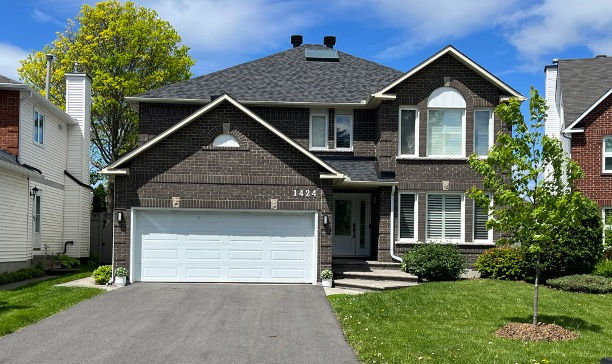
Drive through Orléans, Kanata, Barrhaven, or Stittsville and you’ll notice a distinct architectural pattern.
A massive percentage of Ottawa homes follow the same structural blueprint: premium brick on the front façade, paired with standard siding on the remaining three walls.
And yet, when homeowners talk about wanting to improve curb appeal, modernize their exterior, or feel proud of their home again, the issue is often not the entire property.
It’s the front brick façade.
In fact, we hear some version of this almost every week:
“We love the neighbourhood. We love the layout. We just don’t love the brick anymore.”
Many homeowners eventually reach the point where they quietly think: "I hate my brick." Not because there is anything wrong with the house itself, but because the masonry no longer reflects how they want the home to look and feel.
That distinction matters more than most people realize.
Because when something about a home looks visually “off,” the front brick façade is often the reason.
The brick acts as the visual anchor of the entire property. It heavily influences:
the perceived architectural era of the home
the curb appeal
the emotional first impression from the street
the overall character of the exterior
And when the masonry no longer aligns with the homeowner’s style, the entire property can begin to feel disconnected from the way they want it to present itself.
This is one reason more homeowners throughout Ottawa are exploring brick staining as a way to modernize outdated masonry without sacrificing the authentic character of the home.
Why the Front Façade Carries So Much Emotional Weight
Most homeowners do not emotionally experience all four walls of a home equally.
The front elevation carries disproportionate visual and psychological weight because it’s:
what you see when you pull into the driveway
what guests and neighbours see first
what appears in listing photos
what shapes first impressions
what creates pride of ownership
Even though the brick façade may only represent a fraction of the total exterior surface area, it often controls the visual identity of the entire home.
Common Outdated Ottawa Brick Profiles | Typical Effect on the Home |
Saturated orange brick | Makes the home feel stuck in another decade |
Chalky pink masonry | Clashes with modern trim and siding palettes |
Dark red brick | Creates a visually heavier, darker appearance |
Flat beige brick | Reduces depth and architectural contrast |
Inconsistent faded masonry | Makes the exterior feel disconnected and tired |
Many homeowners update landscaping, lighting, siding, trim, garage doors, and front entry systems… only to realize the brick still dominates the visual conversation.
Because decorative upgrades rarely overpower dated masonry.
The brick almost always wins the visual argument.
The 25% Transformation Principle
This is where things become incredibly interesting from both a design and budget perspective.
For many Ottawa homes, the brick is concentrated primarily on the front façade.
That means homeowners do not necessarily need to:
re-side the entire house
undertake a massive renovation
rebuild exterior walls
commit to a full structural overhaul
Instead, transforming roughly 25% of the exterior can dramatically change how the entire property is perceived.
Why?
Because the front façade often carries the overwhelming majority of the home’s emotional and architectural identity.
That’s why:
Sometimes transforming 25% of the exterior completely changes the way homeowners feel about their home.
From a financial perspective, this often becomes one of the highest visual returns per dollar spent in exterior remodelling.
Minimal disruption.Partial scope.Disproportionate impact.
You May Not Want a New House. You May Just Want the Right Exterior.

This is the part many homeowners do not openly talk about.
Sometimes people begin casually browsing listings not because they truly want to leave, but because the exterior no longer reflects their style.
And yet:
they still love the neighbourhood
they still love the layout
they still love the schools
they still love the memories attached to the property
The home itself was never really the problem.
For many homeowners, updating the brick façade becomes the moment they fall back in love with their home again.
And in many cases, the transformation is not just exciting.
It’s relieving.
Can You Change the Colour of Brick Without Painting It?
Yes.
Brick staining allows homeowners to permanently transform outdated masonry while preserving the natural texture, variation, and character of the original brickwork.
However, how the transformation is executed matters enormously.
Because the difference between:
a timeless, elevated result and
a flat, artificial-looking exterior
usually comes down to realism, restraint, and craftsmanship.
Brick Staining vs. Painting: Why the Difference Matters
This is one of the most misunderstood aspects of exterior masonry transformation.
Traditional paint and solid surface coatings create a film over the masonry surface.
That creates two major problems.
1. The Artificial “Commercial” Appearance
Flat coatings often:
eliminate tonal variation
cover natural movement in the brick
reduce visible mortar definition
create a monochromatic appearance
The result is an exterior that can begin to resemble the flat, sprayed façades commonly associated with commercial storefronts or fast-service buildings.

That may work for a retail chain.
But most homeowners do not want their house to look sprayed, coated, or commercially finished.
They want it to look like authentic masonry.
Real brick contains:
movement
tonal shifts
natural imperfections
texture
depth
visible mortar hierarchy
When everything becomes one flat colour, the masonry often loses the richness that made brick appealing in the first place.
2. Ottawa’s Freeze-Thaw Climate
Brick is naturally porous and vapour permeable.
In other words: it needs to breathe.
Traditional film-forming coatings can trap moisture behind the surface layer.
During Ottawa’s severe freeze-thaw cycles, trapped moisture expands and contracts repeatedly, which can eventually contribute to:
blistering
peeling
cracking
surface deterioration
surface spalling
Professional brick staining works fundamentally differently.
Rather than sitting on top of the masonry, high-quality architectural stains penetrate the brick face itself while remaining vapour permeable.
That means the brick retains its natural breathability while permanently changing its colour profile.
Architectural Realism Matters

At its core, premium brick transformation is really about preserving architectural realism.
The goal is never to make the brick disappear.
The goal is to make it look like better, higher-end brick.
That distinction matters enormously.
Because the wrong exterior treatment can unintentionally make a home feel:
less authentic
overly trendy
visually cheaper
architecturally disconnected
less timeless
That’s why restraint, realism, and balance matter so much in brick transformation.
Why Craftsmanship Changes Everything

This is where craftsmanship separates timeless transformations from regrettable ones.
True masonry transformation is not a one-colour spray application.
Each brick must be developed carefully to preserve:
layered tonal variation
natural depth and texture
authentic masonry character
visible mortar definition
realistic architectural movement
Visible mortar contrast is one of the key details that helps brick continue to feel architecturally believable from the street.
Our approach is intentionally designed to preserve the realism that makes brick feel authentic in the first place.
Poor Transformation | Premium Architectural Transformation |
Flat, single-colour coating | Layered tonal variation |
Hidden mortar joints | Crisp mortar definition |
Plastic-looking finish | Natural masonry realism |
Commercial storefront appearance | Authentic residential character |
Trend-heavy look | Timeless architectural balance |
The goal is never:
flat
plastic-looking
monochromatic
trendy-for-the-sake-of-trendy
The goal is to create a home that looks timeless, natural, elevated, and architecturally cohesive years from now.
The kind of transformation where neighbours often assume the home was completely rebricked.
In fact, hearing homeowners say, "I don't believe my eyes," so often is exactly what inspired our tagline:
“You won’t believe your eyes.”
Why Homeowners Often Need to See It to Believe It
One of the biggest challenges homeowners face is visualizing what their brick could actually become.
Many people become so accustomed to seeing the existing brick that they struggle to imagine the home any other way.
That’s why before-and-after transformations often become the turning point.
Once homeowners see how dramatically the brick façade influences the entire appearance of the property, the shift suddenly becomes very real.
In many cases, people genuinely assume the home was completely rebuilt or rebricked.
Enjoy It Now. Benefit Later.
Most homeowners we work with are not preparing to sell immediately.
They simply want to feel proud when they pull into the driveway again.
But when the time eventually does come to sell, the front façade can heavily influence:
curb appeal
buyer emotion
listing performance
perceived upkeep
perceived value
emotional attachment during showings
Because buyers often begin forming opinions before they ever walk through the front door.
And when a home looks intentional, balanced, and well cared for from the street, buyers tend to approach the entire property differently.
In many cases, that leads to:
stronger first impressions
fewer lowball-oriented buyers
stronger emotional attachment
greater perceived value
and a home that simply feels more desirable from the very beginning
Frequently Asked Questions About Brick Staining
Is brick staining better than painting?
That depends on the goal. If the objective is simply to change the colour, there are many ways to do that. But if the goal is to dramatically transform the appearance of a home while still allowing the brick to look like real brick and mortar, the process matters. Colour development, natural variation, and visible mortar definition are what create architectural realism. Traditional paint creates a surface film that can flatten the masonry and may eventually peel, blister, or crack over time.
Can brick staining modernize outdated pink or orange brick?
Yes. In many cases, homeowners don't dislike their house at all. They simply feel the existing brick makes it look dated. Pink-toned, orange, and dark red brick can often be updated dramatically through thoughtful colour development while still preserving the variation, texture, and visible mortar that make the home feel like authentic masonry rather than a coated surface.
Does professional brick staining cover the mortar joints?
No. One of the most important elements of architectural realism is preserving visible mortar definition. When mortar joints become buried, coated, or visually flattened, the home can begin to lose the character that makes brick look like authentic masonry. The goal is not simply to change the colour of the brick. The goal is to create a dramatically different appearance while still allowing the home to look like real brick and mortar. Preserving the natural relationship between the brick and mortar is a major part of what makes that possible.
Will brick staining make my home look artificial or sprayed?
Will brick staining make my home look artificial or sprayed?
Not when the process is focused on architectural realism rather than simply changing the colour. Layered colour development, natural variation, and visible mortar definition help the finished home continue to look like real brick and mortar. The goal is to create a dramatically different appearance without creating the flat, uniform look often associated with sprayed commercial buildings.
Why is the front façade so important?
Why is the front façade so important?
Because it is often the part of the home people notice first and remember most. On many houses, the front brick façade acts as the visual anchor that influences how the entire property is perceived. When the brick feels dated, the whole home can feel dated. When the brick feels intentional, balanced, and architecturally cohesive, the entire home often feels transformed, even when very little else has changed.
Is brick staining popular in Ottawa?
Yes. Brick staining is becoming increasingly popular across Ottawa and throughout North America as homeowners look for ways to dramatically improve curb appeal without the cost and disruption of major exterior renovations. However, not all brick staining produces the same result. Simply changing the colour of the brick is not enough. Flat, uniform spray applications can leave a home looking artificial or commercial because they eliminate the variation that gives brick its character. The most successful projects focus on architectural realism through thoughtful colour development, natural variation, and visible mortar definition so the finished home still looks like authentic brick and mortar rather than a coloured wall.
Do You Hate Your Brick?
Most homeowners already know when something about their exterior no longer reflects the home they want to own.
A surprising number of Ottawa homeowners tell us the same thing after a transformation is complete:
“We thought we had outgrown the house… but it turned out we had simply outgrown the brick.”
If your exterior looks dated, disconnected, or no longer reflects your style, it may be worth exploring what’s possible before committing to a much larger renovation or move.
And because Ottawa’s exterior season is relatively short and weather dependent, most homeowners prefer to begin those conversations before schedules become more limited later in the season.
“Sometimes the home you want is the one you already have… once the brick finally reflects it.”
Still wondering whether it's the brick?
If you love your home but hate the brick, the answer may be simpler than you think. Before committing to the cost and disruption of rebuilding, replacing, or moving, explore what's possible when the goal is not to create a coloured wall, but better brick.


Comments